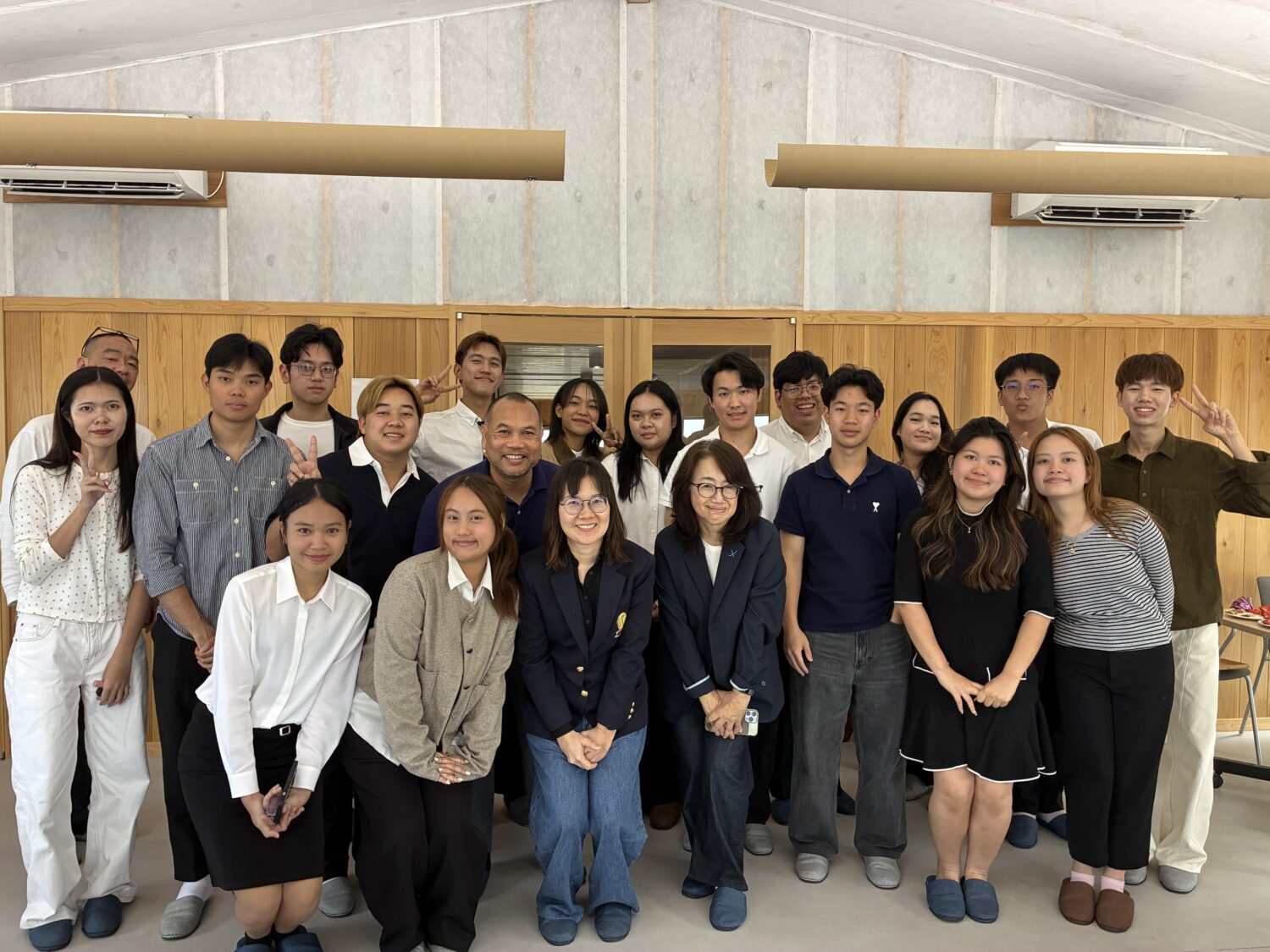
5月25日(月)、タイのチェラロコン大学とメーファールアン大学の経済学部の学生と教職員の皆さま20名が、弊社の「サーキュラーBASE美女木」に訪問いただきました。
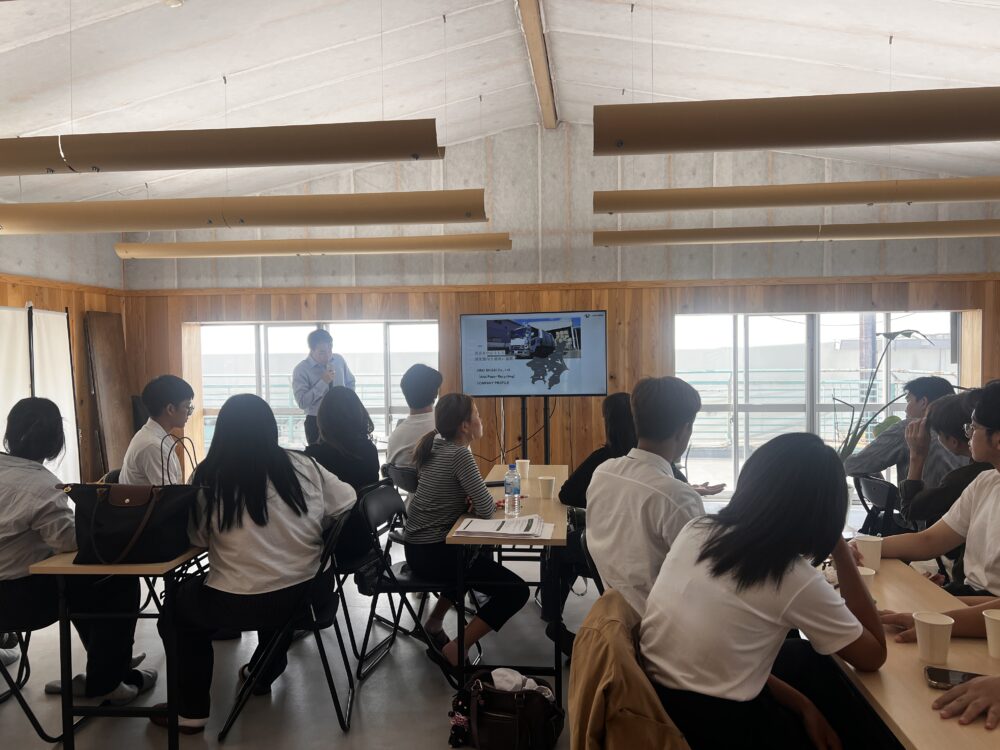
セミナールームでは、弊社代表新井による会社のご案内と、日本のリサイクル事情について説明させていただきました。
続いてCE.T編集長の熊坂が、サーキュラーエコノミーの基礎知識と、取材事例を使ったワークショップを行いました。
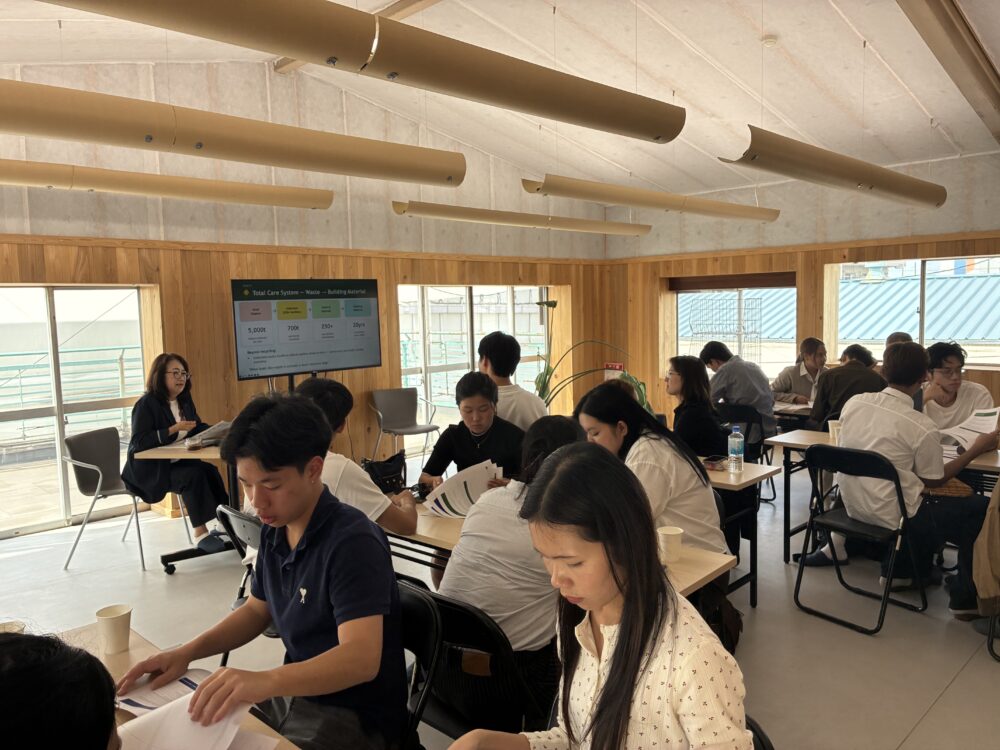
ワークショップは、CE.Tの記事から「トマトの未利用原料を使ったカレー」「廃棄魚網を使ったアパレル」「廃校を使ったデータセンター」「廃棄化粧品を使った染料」の事例を説明し、タイでやるとしたら何ができるか?について考えていただくグループセッションです。4グループに分かれ、最後はプレゼンテーションをしていただきました。
農業国であり、漁業も盛んな国であることから、「トマトのカレー」「魚網」の事例を選ぶグループが多かったです。
学生たちからは、「サーキュラーエコノミーについて知らなかったので、勉強になった」「自国の資源循環について具体的に考えるきっかけになった」という感想をいただきました。
チェラロコン大のTouchanun Komonpaisarn先生からはこのようなお礼の言葉をいただきました。
The workshop you prepared for us was very inspiring. In particular, the ideas we discussed about managing agricultural waste and recycling old fishing nets were incredibly important for us. Because Thailand relies so heavily on the agriculture and fishery industries, learning how to apply circular economy principles to these specific items was truly eye-opening. It helped our students think outside the box and care even more about solving environmental problems.
(ご準備いただいたワークショップは、大変刺激的なものでした。特に、農業廃棄物の管理や古い漁網のリサイクルについて議論した内容は、私たちにとって極めて重要なものでした。タイは農業や漁業に大きく依存しているため、これらの分野に循環型経済の原則をどのように適用できるかを学ぶことは、まさに目から鱗が落ちるような経験でした。これにより、学生たちは既成概念にとらわれず、環境問題の解決に一層関心を持つようになりました)
タイの学生たちのキラキラした目が印象的でした。これをきっかけに、サーキュラーエコノミーに少しでも関心を持っていただき、アクションを起こしていただけたら何よりです。
On Monday, May 25, a group of 20 students and faculty members from the economics departments of Cherarokhon University and Mae Fah Luang University in Thailand visited our “Circular BASE Bijo-gi” facility.
In the seminar room, our CEO, Ryoichi Arai, gave a presentation on our company and explained the current state of recycling in Japan.
Following this, Hitomi Kumasaka Editor-in-Chief of CE.T, conducted a workshop covering the basics of the circular economy and using case studies from our reporting.
The workshop involved group sessions where participants were asked to consider what could be done in Thailand, based on case studies from CE.T articles: “Curry made from unused tomato byproducts,” “Apparel made from discarded fishing nets,” “A data center in a former school building,” and “Dyes made from discarded cosmetics.” The students were divided into four groups and gave presentations at the end.
Since Thailand is an agricultural nation with a thriving fishing industry, many groups chose the “tomato curry” and “fishing nets” case studies.
The students shared feedback such as, “I didn’t know much about the circular economy, so this was very educational,” and “It gave me a concrete opportunity to think about resource circulation in my own country.”
We also received the following words of appreciation from Dr. Touchanun Komonpaisarn of Chulalongkorn University:
"The workshop you prepared for us was very inspiring. In particular, the ideas we discussed about managing agricultural waste and recycling old fishing nets were incredibly important for us. Because Thailand relies so heavily on the agriculture and fishery industries, learning how to apply circular economy principles to these specific items was truly eye-opening. It helped our students think outside the box and care even more about solving environmental problems."
The sparkle in the Thai students’ eyes left a lasting impression on me. I hope this experience will spark even a small interest in the circular economy and inspire them to take action.